CrossFit Flooring Guide: How to Choose and Zone Rubber Flooring for Your Box
The wrong floor ruins a good box: cracked tiles under dropped bars, rolled edges at sled tracks, and a budget blown on thickness where it isn't needed. This guide explains how experienced box owners zone their floor, pick the right thickness for each zone, and decide between rolls, tiles and mats — from the factory that manufactures CrossFit flooring for gyms in 18+ countries.
Step 1 — Zone Your Floor Before You Buy Anything
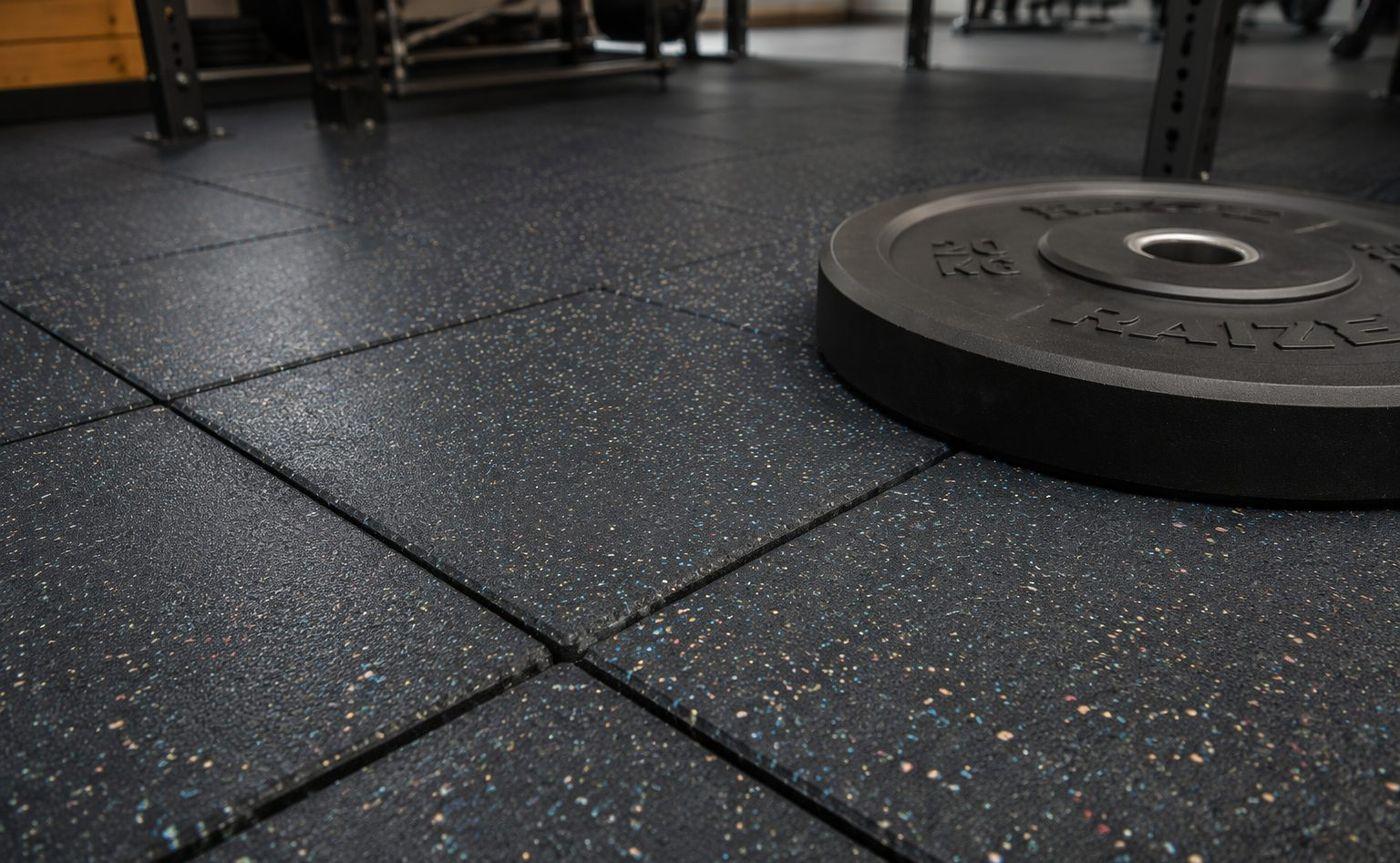
A CrossFit box is really 3-4 different floors wearing one logo. Lifting zones take violent point impacts from dropped barbells; the open WOD floor takes constant foot traffic, sled pushes and dropped kettlebells; plyo corners need grip and give; entry zones need edge safety. Buying one product for the whole box either overspends on the WOD floor or under-protects the platforms.
| Zone | Typical size in a 500 m² box | Impact level | Recommended product |
|---|---|---|---|
| Lifting platforms / rig area | 80-120 m² | Extreme (barbell drops) | 40-50 mm tiles or 1×1 m mats |
| Open WOD floor | 250-300 m² | Moderate (KB, burpees, sled) | 8-10 mm rolls or 20-25 mm tiles |
| Plyo / bodyweight corner | 40-60 m² | Low impact, high grip need | 6-10 mm rolls |
| Entry, turf transitions | 20-40 m² | Traffic, trip risk | Bevelled-edge mats |
Step 2 — Match Thickness to the Drop
Thickness is about protecting the subfloor and the equipment, not comfort. A 20 kg bumper plate dropped from overhead generates a point load the subfloor feels directly through thin flooring. The rule of thumb we use with box owners:
Olympic lifting / heavy drops: 40-50 mm under platforms and rig stations — anything less eventually telegraphs cracks into the slab
General WOD with occasional KB drops: 20-25 mm tiles or 8-10 mm rolls over a sound slab
Bodyweight, plyo, warm-up: 6-10 mm rolls are enough — grip and cleanability matter more than cushion
Over a suspended wooden floor: add 10 mm to every zone above, or the barbell will find the joists
Step 3 — Rolls, Tiles or Mats?
Each format wins in a different zone, which is why most boxes mix them.
Rolls: seamless, cheapest per m², fastest to clean — best for large WOD and cardio areas
Interlocking tiles: replaceable one-by-one when a corner fails, no adhesive on flat slabs — best for free-weight and functional zones
1×1 m mats: maximum drop protection per square metre, double as lifting platforms — best under rigs and platforms
Step 4 — Budget Realistically
Material cost scales with thickness, but installation and waste move the real number. Rolls waste 5-8% on cutting; interlocking tiles under 3%; complex zones with sled tracks and rig posts waste more. As a factory-direct reference: a well-zoned 500 m² box typically spends 60-70% of the 'one thick product everywhere' budget while getting better protection where it counts.
Noise: The Complaint That Gets Boxes Sued
Dropped bars transmit structure-borne noise. If your box is near offices or residences, 40-50 mm platforms plus rubber underlay strips at wall lines cut transmitted noise dramatically — far cheaper than retrofitting after a neighbour complaint. Ask us about acoustic underlay options when you spec your quote.
FAQ: What Thickness of Rubber Flooring for a CrossFit Box?
Zone it: 40-50 mm under lifting platforms and rigs, 20-25 mm tiles or 8-10 mm rolls on the open WOD floor, 6-10 mm rolls in plyo corners. One uniform thickness across the whole box is almost always the wrong purchase.
FAQ: Is Rubber Flooring Safe for Olympic Lifting Drops?
Yes, when the thickness matches the drop. A 40-50 mm rubber tile or mat under a proper platform protects both the barbell and the subfloor. Thinner flooring under repeated max-effort drops will fatigue and crack within months.
FAQ: How Much Does CrossFit Flooring Cost per m²?
It depends on thickness and format: rolls are the lowest cost per m², thick 1×1 m mats the highest. Zoning — thick only where drops happen — typically saves 30-40% versus uniform thick flooring. Send us your floor plan and we return a zoned quote within 24 hours.
FAQ: Can I Install CrossFit Flooring Myself?
Interlocking tiles and 1×1 m mats: yes — dry-lay on any flat, clean slab. Rolls in large areas are best glued by a fit-out crew; seams and adhesive open time are where DIY installations fail. See our installation guide for subfloor requirements and step-by-step.
FAQ: How Do I Stop Barbell Drops From Shaking the Building?
Use 40-50 mm platforms under drop zones, keep lifting stations away from shared walls where possible, and add acoustic underlay strips along wall lines. Flooring absorbs impact; underlay stops the slab from transmitting it.
Get a Zoned Flooring Quote
Send your box floor plan or rough dimensions — we return a zone-by-zone spec, thickness map and factory-direct quote within 24 hours.
Contact UsSend an Inquiry
Goes directly to our export team — reply within 24 hours.
Sent securely and directly to our sales team. We reply within 24 hours.